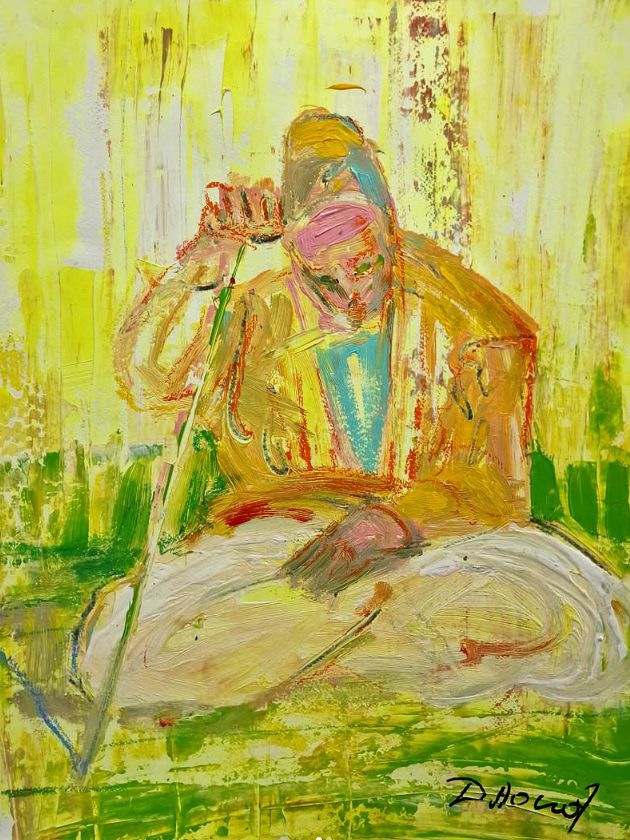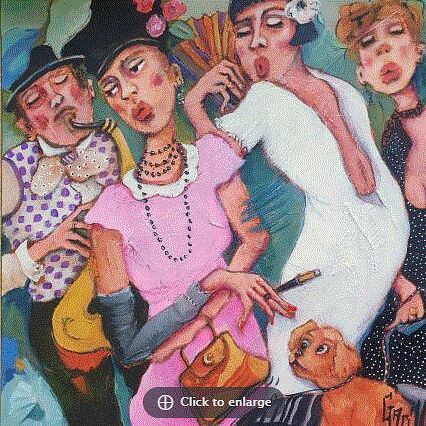
This exhibition is inspired by "Le Voyage" by Charles Baudelaire from Les Fleurs du mal,Lina Karam draws a parallel between the poet's call toward the unknown and her own departure and personal journey.
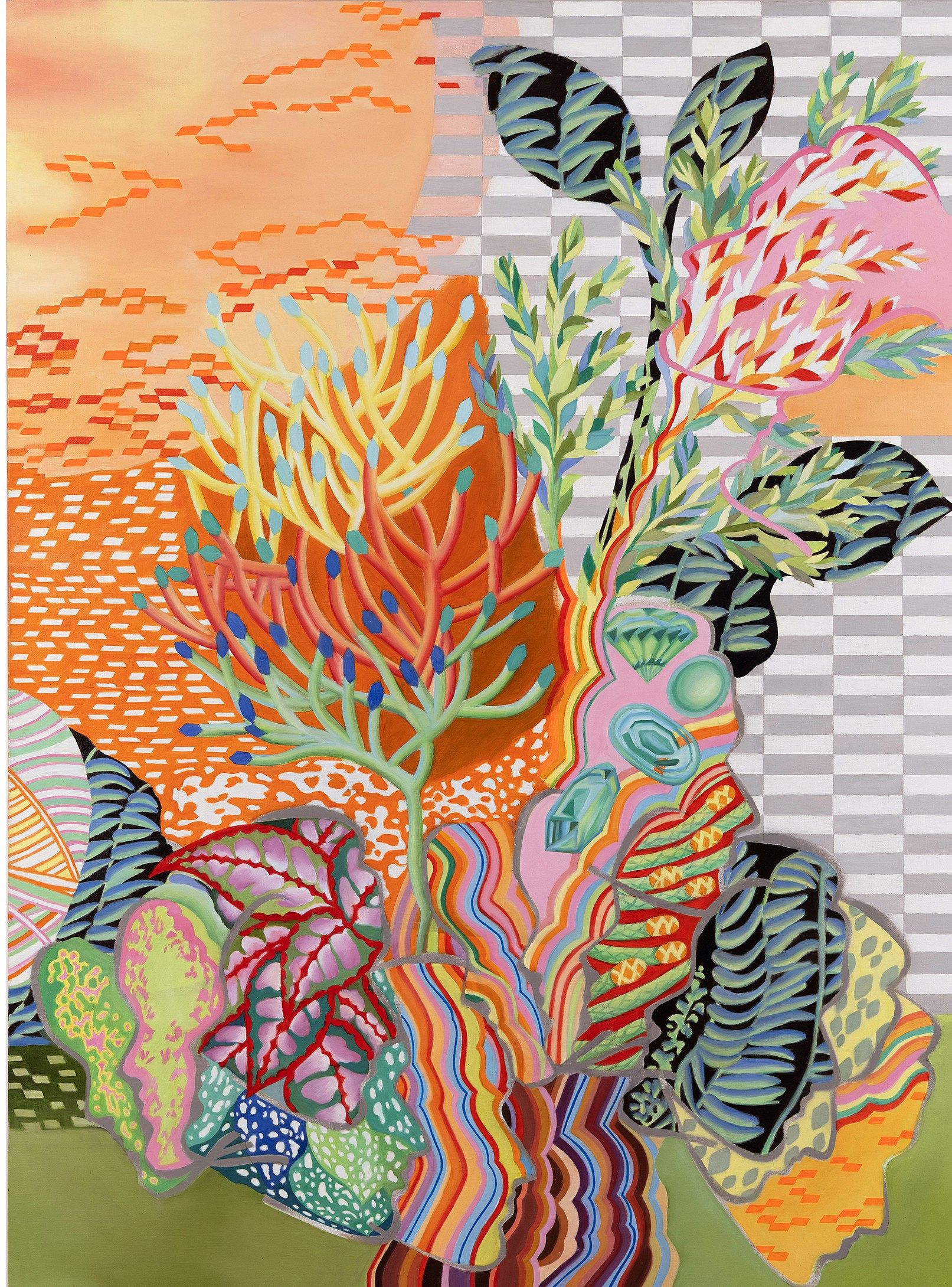
The works on view,composed of delicate materials,digital inkjet prints,and oil painted textures,investigate how travel reshapes one's identity.The artist reveals the deeper motivations behind her departure:a desire for openess,a need for transformation,a search for new horizons,and the willingness to confront unfamiliar territories.The encounter between Baudelaire's text and her personal narrative creates a visual story that is both intimate and universal.
Lina Karam is a French-Lebanese painter, graphic artist, and designer born in Beirut. Trained in Paris at the Met de Penning hen and Jacques d'Andon ateliers, she began her career in the 1980s with several well-received exhibitions.
Her distinctive visual world-rich in colors, motifs, and staged compositions-quickly drew the attention of major fashion houses. She collaborated with Yves Saint Laurent, Gucci, Diane von Furstenberg, Giambattista Valli, Maschino, Louis Vuitton, Dolce & Gabbana, and contributed motifs for Valentino in 2019..
Her work has been shown internationally, including at the Venice Biennale (2015, 2019, 2022) and the Saatchi Gallery in London.
She continues to develop her artistic practice through painting and printed canvases, exploring themes connected to the Mediterranean, memory, mythology, and personal narrative.
Lina Karam's work is rooted in memory, movement, and the ongoing dialogue between the visible world and the imagined one.
A French-Lebanese artist who grew up between cultures marked by both fragility and resilience, she paints to reconstruct fragments of history-personal as well as collective.
The Mediterranean-its light, its myths, its ruptures-forms the emotional landscape from which her images emerge. She explores the boundaries between painting, design, and printed textiles, weaving together colors, patterns, and layered transparencies. These elements are not decorative; they are traces of lived experience. They evoke childhood, exile, war, and the intimate rituals of looking. The repetition of motifs, often inherited from her background in fashion, becomes a visual rhythm, a way of asserting presence.
In her recent works, she focuses on hybrid surfaces-painted canvases intertwined with printed textures-that allow her to blur the line between the handmade and the mechanical. This tension mirrors the workings of memory:
fragmented, recomposed, never entirely still.
Événements similaires
En cours
Art
Musée Sursock
Jusqu'au 20 juin 2026